The Address Book
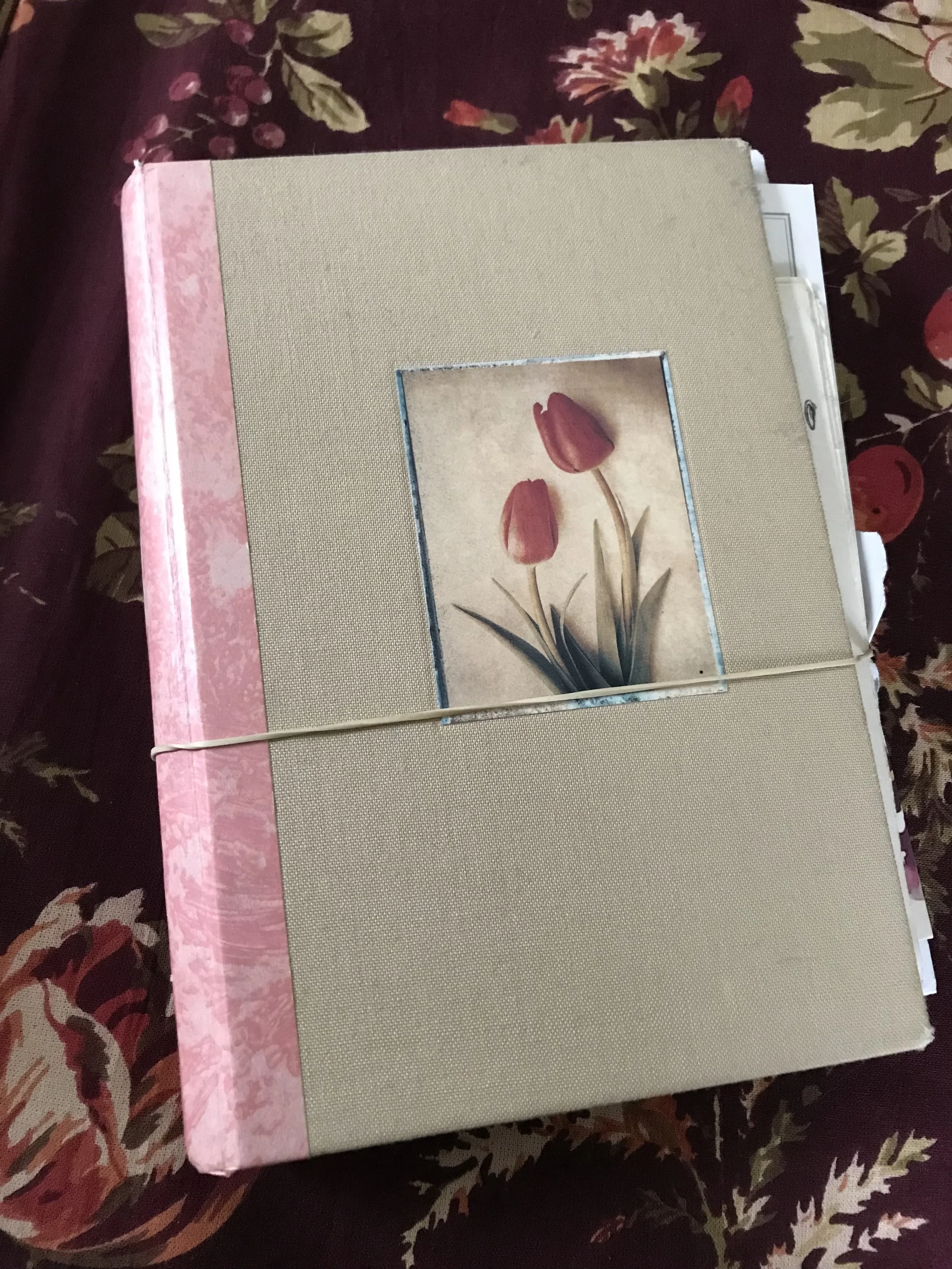
Last summer I found my mother’s old address book. It was tucked into a basket of writing books I keep under my desk. I am not sure why I had decided to keep this clothbound book with pink tulips on the cover, secured with a rubber band, in a basket of books about writing of all places. Was finding it a message from my mother? Was finding it part of my evolving communication with my mother a decade after her death?
Coincidentally, or not, I happened to have found the address book on what would have been my parents' wedding anniversary. I remember their anniversaries as sunny June days, huge pink peonies blooming along the front walkway, yellow primrose flanking the sides of the house in the backyard. Out in the front yard on the day of their 50th wedding anniversary party my father gave my mother a hug and a kiss. My sister-in-law captured the moment in a black and white photograph. Together, my mother and I had pored over the pages of the address book to send invitations out for their anniversary party. My parents would spend only six more anniversaries together before my dad succumbed to Alzheimer's. I would use the address book only one other time – for invitations to her 80th birthday celebration. Less than a decade later, she would be gone. The address book, an archive of my mother’s life, would be slipped into a basket under my desk, all but forgotten.
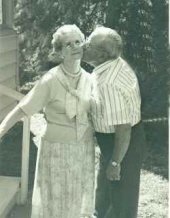
Mom and Dad at their 50th Anniversary Party
“Out in the front yard on the day of their 50th wedding anniversary party my father gave my mother a hug and a kiss, my sister-in-law capturing the moment in a black and white photograph.”
It’s hard for me to write about my mother kindly, gently. My mother and I shared a complicated relationship, fraught with conflict and hard feelings we both nursed into unspoken grudges and years of mutual resentment. But it was a relationship, nonetheless, a mother-daughter relationship that spanned almost 58 years.
I suppose I bought her that address book for her birthday or Mother's Day or perhaps Christmas back in the early nineties. I remember noticing her old one was falling apart, and I wondered which volume the tattered edition was. With the new book’s floral cover and larger size, I remember thinking it could perhaps accommodate her already failing eyesight.
My mother was an inveterate correspondent. She probably held the record for worn out and recopied address books. An address with a line through it meant the entry had moved, and the correction would be close by. An entry with a slash through it and a date meant a death. This address book contained a lot of such notations. It was her registry of lifetime accounts.
Unsplash Image
Thumbing through her address book I was stunned at the number of relationships she cultivated over a lifetime, all the acquaintances who became friends through exchanges of letters and cards. Each address was written in her careful penmanship, a perfect example of the Palmer Method. It pained her to see her beautiful cursive deteriorate as she aged, and I could tell when people entered her life based on the size and slant of her entries in the address book.
The address book is a thick one. Most entries include phone numbers and birthdays, which means she had talked on the phone with the person entered at least once, and most likely they had received a birthday card with a small note, or a letter, or maybe two crisp one dollar bills on a birthday or Christmas if the address was for a child.
Only a fraction of the address book would be transferred over to her Christmas card list. I found her Christmas card box three years before she died. She was still living in her own home, but her health had already started to deteriorate. In the box, she had two neat lists written on the backs of mimeographed worksheets salvaged from her teaching days, now her scrap paper. A child of the Great Depression, my mother was never one to waste anything. Written in pencil, one Christmas card list was for Relatives and one for Friends. “Well Known Landmarks” was written in purple mimeograph ink on top of the scrap paper labeled worksheet C390. I am struck by how those lists, along with her address book, became landmarks in the landscape of my mother’s life.
Unsplash Image
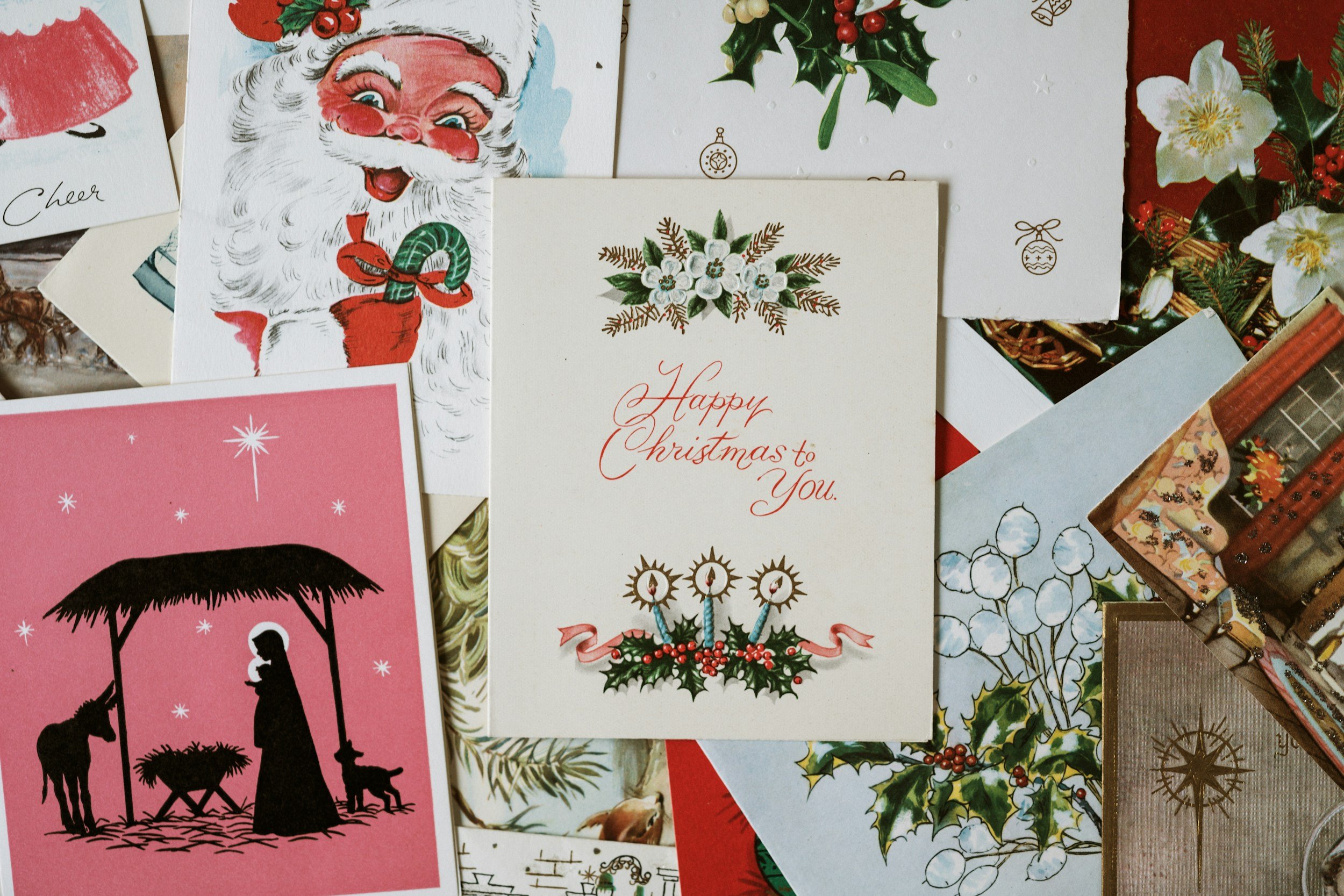
In the front of the address books were a handful of Christmas cards from her last Christmas at the assisted living facility. Some of them were signed by relatives and friends who passed away not long after my mother. They were a small fraction of cards she would have sent and received when she was younger, working as a teacher and being our mom, instead of the frail woman who had become too old to read her own handwriting at times. The tucked away cards wished her a “happy and peaceful new year.” Three months into the new year she would leave the world after a week of hospice care, which was far from peaceful. I wonder how my mother would have described the last time she was happy in those final months.
I think the answer is tucked away in the pages of the address book. A sister to a dozen siblings, with hundreds of cousins, nieces and nephews, along with church friends from her home town as well as the city she lived in, teacher acquaintances, parents of countless students, grown students who stayed in touch, neighbors past and present; the address book is literally spilling over with what made my mother happy and gave her life weight. It is filled with the validation of being noticed, being “remembered,” being counted among someone’s list of loved ones, friends, relatives, neighbors – that mattered to her. These were the people who knew her as sister, aunt, cousin, Mrs., and by her first name. In some ways, this is how my mother measured her worth. It made her proud. It gave her an identity that always filled her with a benevolent sense of self. It was an identity that was free from the judgment and conflict that came with the titles of wife and mother.
In the letters she wrote to the members of the address book, she shared the best versions of her life, an idealized depiction of her days. In meticulous cursive, she portrayed her world as she wanted it to be. She had a greeting card collection that allowed her to be Florence Nightingale to the convalescing, flatterer-in-chief to those growing a year older, and a comforting mourner to a loss. Her cards and letters were a reflection of etiquette, and model exchanges of care and concern. Most of all, they were expressions of connection.
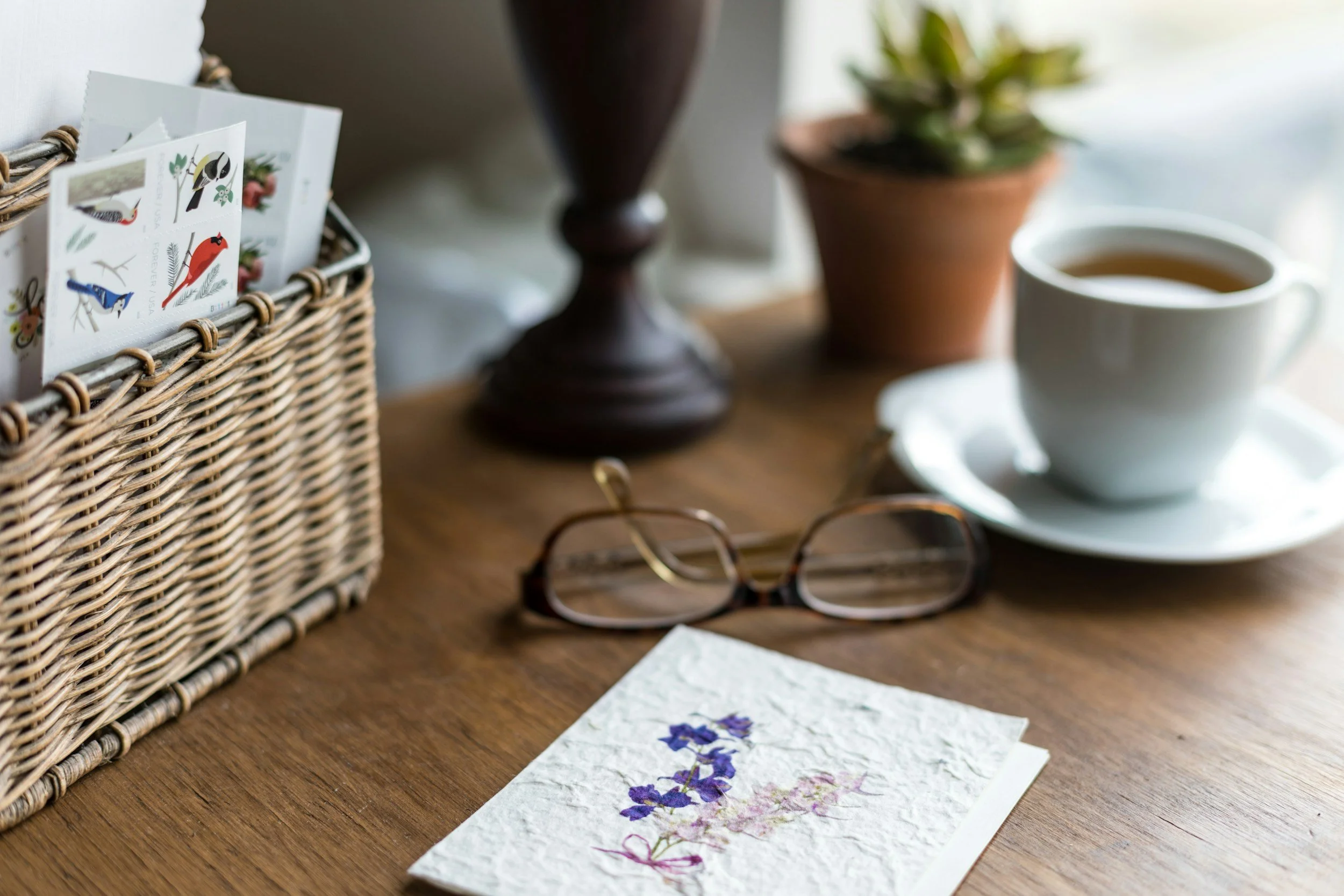
The community that lived in the address book allowed my mother some form of control — over relationships that did not live up to her expectations and over an often chaotic home life. Putting a card or letter in the mail was often enough to affirm my mother’s sense of worth. It was a proper and considerate thing to do. If she received a response, it was a welcome affirmation of her value as a good person. Cards from friends and relatives were always displayed. Recent letters sat in a basket on the television. They were souvenirs of sharing a history, staying connected, and being “dear” to someone in a message closed “with love.”
Unsplash Image
Recently I put three cards in the mail and thought of my mother. Perhaps a daughter’s legacy is to become both the best and worst of her mother. Death changed my complex relationship with my mother. Echoes of mutual bad feelings have quieted over time and have been replaced by the gentlest visitation dreams. In these dreams my mother and I are content with each other’s company. She is supportive and helps me solve my problems. I am patient and more understanding.
Now I face my own version of growing into an old woman, and the prospect of someday being alone, being lonely, and perhaps depending on a text, an email, a phone call, or a card or letter to stay connected. I’m tempted to look through my own address book, page by page, to determine what story it tells about me, about people I have held on to or perhaps discarded. I will think of it as mother/daughter time, well spent.
Do you still keep an address book, an old “analog” version of one? What story do you think it tells about you?
Drop a comment below.